Transferring blame
The problem of keeping track when stock is on the move
When stock goes missing, the finger pointing starts
Moving stock between retail locations and warehouses should be a simple process to put the right items in the right place at the right time. Invariably and for many retailers, it becomes a source of great friction and frustration.
Items leave one location, heading for another, and somewhere in between something goes wrong. Then the questions start. Was it short-shipped by the warehouse? Was it incorrectly received at the store? Was it scanned? Was it counted? Was it even on the truck in the first place?
And so the blame game begins.

Transfers expose visibility gaps
Moving stock between warehouses, stores and fulfilment centres is one of the most complex parts of retail operations. The more locations you add, the more opportunity there is for things to fall through the cracks.
Traditional inventory systems rely heavily on manual scans, physical counts, handovers and assumptions. If one step is missed, stock can appear “lost”, even when it still exists somewhere in the network.
It’s a visibility problem.
Is it lost in transit? Or just invisible?
Many items marked as missing aren’t stolen or lost. They’re simply in the wrong place, incorrectly scanned or not scanned at all. Without real-time visibility, teams are left guessing. And guessing leads to much finger-pointing and friction between your people.
Warehouse teams blame the stores. Stores blame the system. Operations blame processes.
Plenty of talk, but none of it solves the problem.
Why barcodes struggle with movement
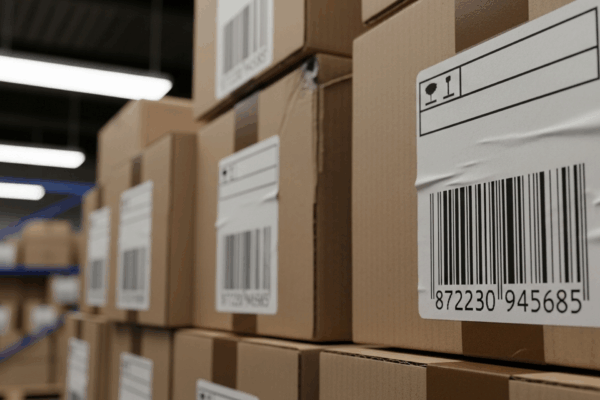
Barcodes work well at checkout, but they struggle when inventory is constantly on the move. They require line-of-sight and up-close scanning, perfect compliance to systems and processes, and manual effort at every point of transfer or hand-off.
Miss one scan, and accuracy is out the window.
RFID removes that fragility. RFID tags are read automatically, without line-of-sight, and in bulk. Entire pallets, cages or racks can be scanned in seconds, confirming exactly what moved, when it moved and where it is now.
Replace assumptions with proof
RFID ensures stock transfers stop being a guessing game. Every movement creates a reliable digital record. Stock is verified at dispatch, verified again on arrival and tracked throughout its entire journey.
With RFID, you can expect:
- Reduced stock loss
- Fewer disputes
- Faster reconciliations
- Less manual investigation
- More trust between teams
- Increased efficiency of operations
Instead of debating what should have happened, teams can see what did happen. And you and your team can focus on selling stock to your customers, not madly scrambling to find missing or misplaced stock.

A single source of truth
When stock transfers are transparent, blame disappears. Everyone works from the same data, updated in real time. Decisions become faster, calmer and more accurate.
RFID doesn’t just improve operational efficiency, it improves working relationships. It removes tension, reduces friction and allows teams to focus on selling, not searching. If your transfer process regularly ends with “we’ll look into it,” visibility is the missing piece of the puzzle.
If you’re sick of wasting time trying to find stock that has gone “missing in transit”, talk to the RFID experts at Ramp about the fast and seamless way to add visibility to your inventory management system.
